ServicesGutters
Gutter Replacement and Repair in McCordsville
We install and repair gutters and downspouts so water leaves your roof and lands well away from your foundation. We look at the whole drainage path, give you a written estimate, and help you schedule the work for a calm season instead of after a wet basement.
What a gutter system actually does for your roof
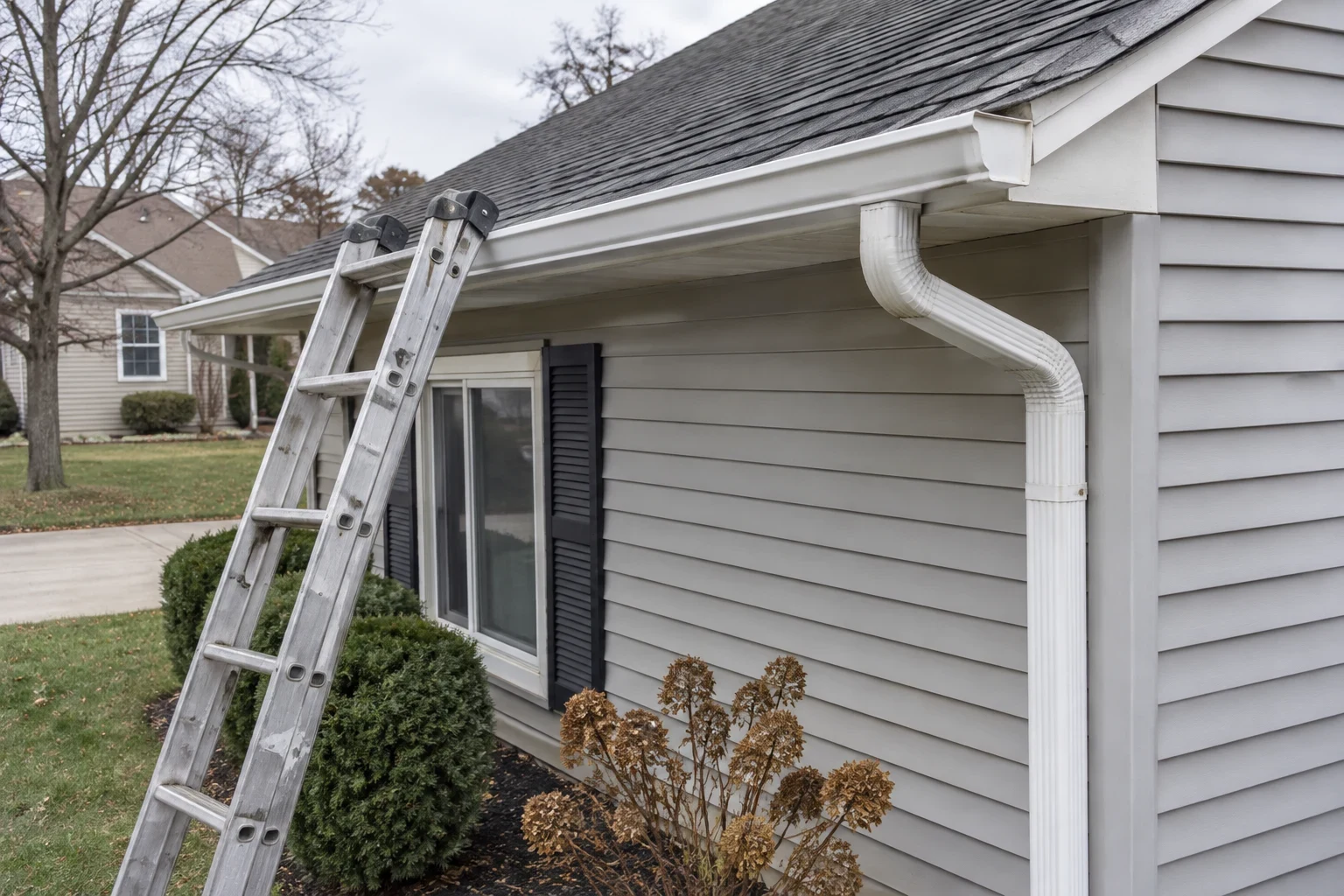
Gutters are the last step in your roof's drainage. Shingles shed water to the eave, the drip edge directs it into the trough, and the downspouts carry it out to the yard. When any link in that chain fails, water ends up behind the fascia, along the foundation or across the walkway, where it freezes on a January morning.
Most gutter problems build slowly. A seam starts to weep, a hanger loosens, a run loses its pitch and holds an inch of standing water. Caught early, these are small, scheduled repairs. Left through a few central Indiana winters of freeze and thaw, they rot fascia boards and soften the roof decking at the edge.
We show you where your system stands now and what it is likely to need over the next few years, so you can budget for it rather than react to it. Sometimes that means a few hours of resealing and rehanging. Sometimes it means new continuous-run gutters timed with a roof replacement, so the two are fitted together once.
What our gutter work includes
Continuous-run aluminum gutters
We form gutters on site in single lengths, with joints only at the corners and downspout outlets. Fewer joints means fewer places to leak, and the finish stays even along the whole eave.
Correct sizing and pitch
We measure the roof area that feeds each run and size the trough and downspouts to match. Long runs get a steady slope toward the outlets, enough to drain without looking crooked from the street.
Hidden hangers on close spacing
Hangers are fastened through the fascia into the rafter tails at tight intervals, so the gutter holds its line under wet leaves and winter ice.
Downspouts that discharge well
We place downspouts where the water can go somewhere useful and add extensions or splash blocks to carry it away from the foundation.
Repairs to existing systems
We reseal joints, replace failed end caps, rehang sagging sections and re-pitch runs that hold water. If a run is past saving, we say so and show you why.
Fascia and drip edge checks
Before new gutters go up, we check the boards they hang on. Soft fascia is replaced first, and missing drip edge is added so water cannot run behind the trough.
Signs your gutters are due for work
- Overflow during a steady rain
- When rain pours past the outer lip instead of into the outlets, something is blocking it, the trough is too small, or the slope runs backward. The fix differs for each, and we pin down which applies to your home.
- Sagging or pulling away
- A gutter that dips between hangers or leans out from the eave has lost its fastening. Ice and wet debris usually finish the job the following winter.
- Streaks or blistered paint on the trim
- Dark lines and bubbling paint on the board behind the gutter mean water is slipping in where it should not. Rot in that wood often starts right there.
- Puddles or erosion near the foundation
- Washed-out mulch beds, sunken soil along the walls or a damp basement corner often trace back to a downspout that ends too close to your home.
- Heavy ice along the eaves
- Thick icicles and ice ridges point to gutters that hold water and to heat escaping at the roof edge. We look at both.
How a gutter project runs
- 1
A free roof inspection first
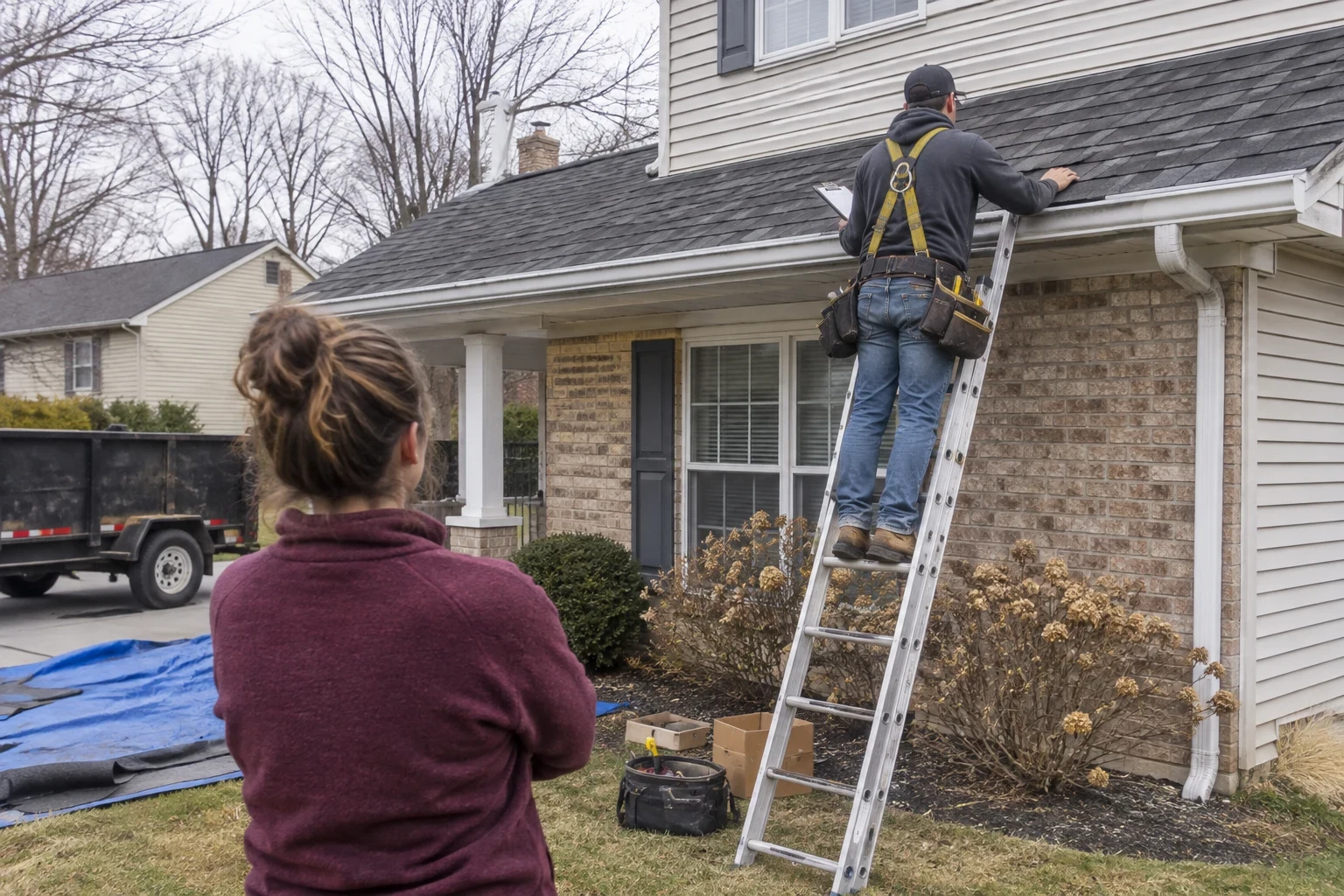
Call and we set a time to look at your roof and gutters together. We walk the full perimeter, check the roof edge and take photos of what we find.
- 2
A written estimate and a plan
You get a line-item estimate that separates repairs that matter now from work that can wait. If replacement makes sense, we help you time it for a dry stretch or pair it with roof work already planned. Financing is available if it helps spread the cost.
- 3
Installation day
Most homes are finished in a single day. We protect plantings and walkways, remove the old gutters, replace any soft fascia, then hang and pitch the new runs and set the downspouts.
- 4
Water test and cleanup
A hose run through each section confirms it carries water to the outlets. Old metal, stray fasteners and debris leave with us. Then we stand with you at the eaves, point out the new work, and note the few things worth checking after the first heavy rain and the first hard frost.
What shapes the cost of gutters
Gutter pricing comes down to how much material goes up, how hard the eaves are to reach, and what we find behind the old system. We break those pieces out separately in the written estimate we hand you. That way you know what each part of the job costs and can decide what to do now and what to set aside for later.
- Linear footage and corners
- The total length of eave, the number of inside and outside corners, and how many downspouts the roof needs.
- Height and access
- Two-story eaves, steep slopes and tight side yards take more setup time than a single-story house with open ground around it.
- Gutter size and options
- Larger troughs and oversized downspouts cost more but suit roofs that shed a lot of water. Gutter guards add to the price and cut down on cleaning.
- Soft or rotted trim boards
- A new gutter is only as secure as the wood it fastens into. Where the fascia has gone soft, we swap in sound lumber first, and you see photos of the damage before that work is priced.
- Repair versus replacement
- Fixing a few failing joints on a sound system costs far less than a full replacement. When both are reasonable, we price both.
Gutter questions we hear often
- Should I replace my gutters before or after a new roof?
- If both are due within a few years, doing them together usually makes sense. The drip edge and gutters are fitted as one detail, and you avoid disturbing a new roof edge later. If your roof has plenty of life left, we can replace the gutters now and plan a roof replacement separately.
- Can my existing gutters be repaired instead of replaced?
- Often, yes. Leaking seams, loose hangers and poor pitch are usually repairable on a system that is otherwise sound. When the metal is bent or corroded, or the run is too small for the roof above it, repair only postpones the problem, and we will tell you that plainly.
- Will a storm claim pay for dented or torn gutters?
- Hail and wind can dent or tear gutters, and that damage is sometimes part of a homeowner's claim. We photograph every dent and torn section we find, so you have a clear record to share. Whether it is covered is up to your carrier and its adjuster, not us. The Storm Damage Repair page explains how we work alongside homeowners and their carriers on those claims.
- What credentials stand behind your gutter work?
- We are licensed, bonded and insured, and we hold an A+ BBB rating. That matters on a gutter job, since most of the work happens on ladders at the roof edge of your home.
- How often should gutters be cleaned?
- Twice a year suits most homes: once after the leaves drop in fall and again in late spring once seed pods and blossoms are down. Homes under mature trees may need more. Clean gutters also make it easier to spot sagging or leaks before they spread.
- When is the best time to schedule gutter work?
- Late spring through early fall gives the most flexibility. Planning a few months out lets you pick a dry stretch and have new gutters in place before the leaves fall and the first freeze arrives. Work can be done in colder months too, as long as the eaves are clear of ice.
Plan your gutters before the next wet season
We start with a free roof inspection that covers your gutters, downspouts and roof edge. You get photos, a clear written estimate and an honest sense of what can wait.