ServicesShingle Roofing
Shingle Roofing in McCordsville, IN
We install asphalt shingle roofs as a complete system, from the deck and underlayment to the ridge vent, so the finish looks clean and the roof holds up through hard winters. We help you plan the timing and the budget before a worn roof makes the decision for you.
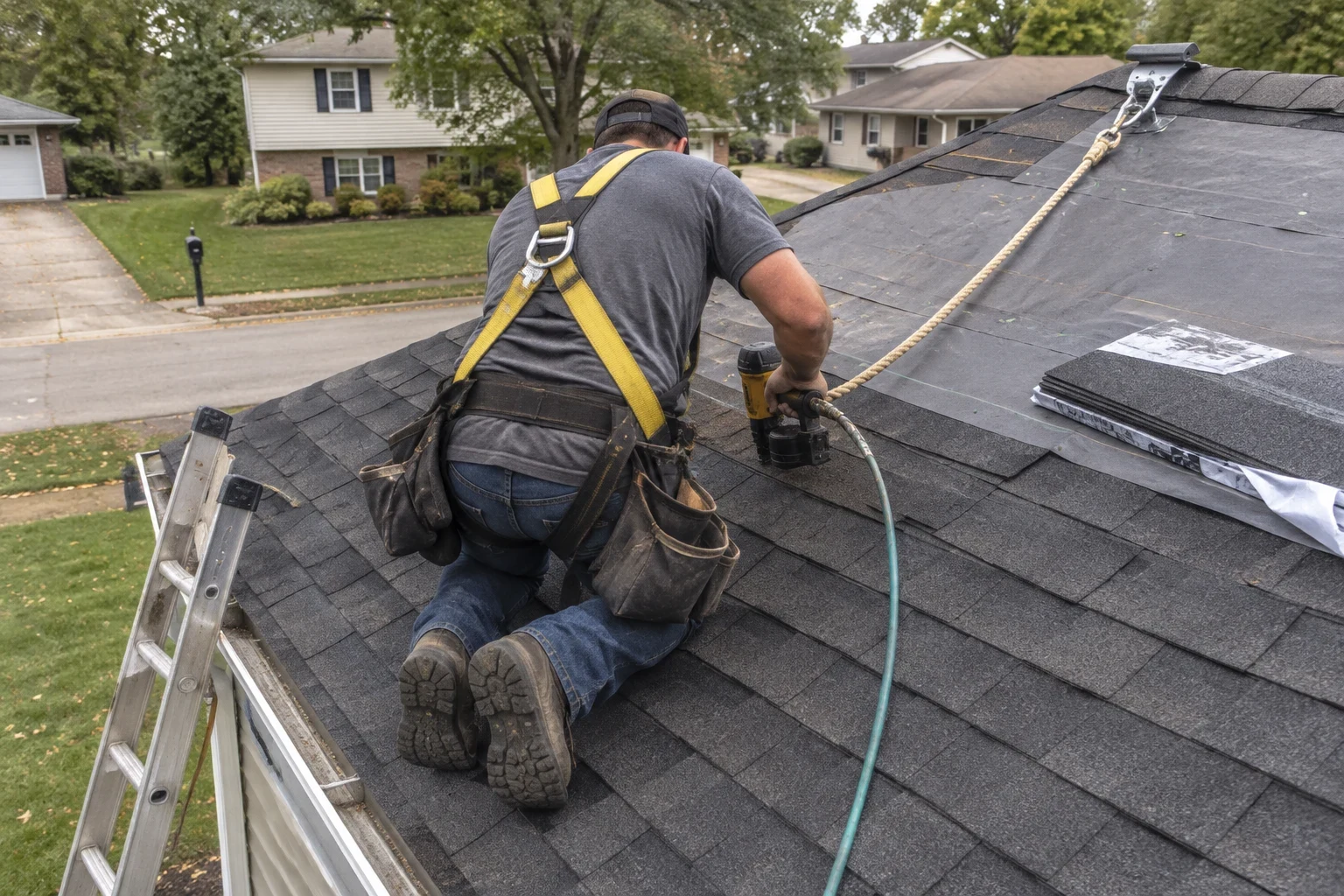
A shingle roof chosen before it's urgent
Asphalt shingles cover most homes for good reason. They shed rain and snow well, come in a wide range of colors and profiles, and a damaged section can be repaired without disturbing the rest of the roof. Modern architectural shingles are thicker and layered, which gives the roof more depth and resists wind better than the flat three-tab style many older roofs still carry.
The best time to replace shingles is a season or two before you have to. Granules wash into the gutters, edges curl, and a roof shows its age well before it leaks. Catch those signs early and you choose the shingle, the color and the month. You can line the cost up with your budget, or use our financing, instead of paying for a rushed job after water reaches the ceiling.
We are licensed, bonded and insured, and we hold an A+ BBB rating. A crew may spend several days on your roof, so those are reasonable things to check with any company you are weighing for the work.
Every part of the shingle system, start to finish
Complete removal of the old roof
We strip the existing shingles and felt all the way down rather than layering new material over them. That lets us walk the open wood, judge every sheet and start the new roof on a sound, even base.
Decking replaced as needed
Any plywood that is soft, swollen or separating gets swapped out before new layers go down. You get photos of each problem sheet so the reason for the change is clear.
Ice and water barrier
Through thaw and refreeze, meltwater can back up beneath the lowest courses of shingles. A self-sealing membrane along the eaves, in the valleys and around penetrations stops it short of the attic, with synthetic underlayment over the remaining deck.
Fresh flashing and drip edge
Leaks most often start at chimneys, sidewalls and vent pipes. We install new step flashing and pipe boots rather than saving worn metal, and drip edge carries water past the fascia.
Attic ventilation in balance
A hot, stuffy attic cooks shingles from below and shortens their life. We weigh intake against exhaust and add soffit intake or ridge vent where the space calls for it.
Care for your property
Tarps go over beds, shrubs and walkways before tear-off begins. Each evening a magnetic sweeper passes over the yard and driveway to pick up stray nails.
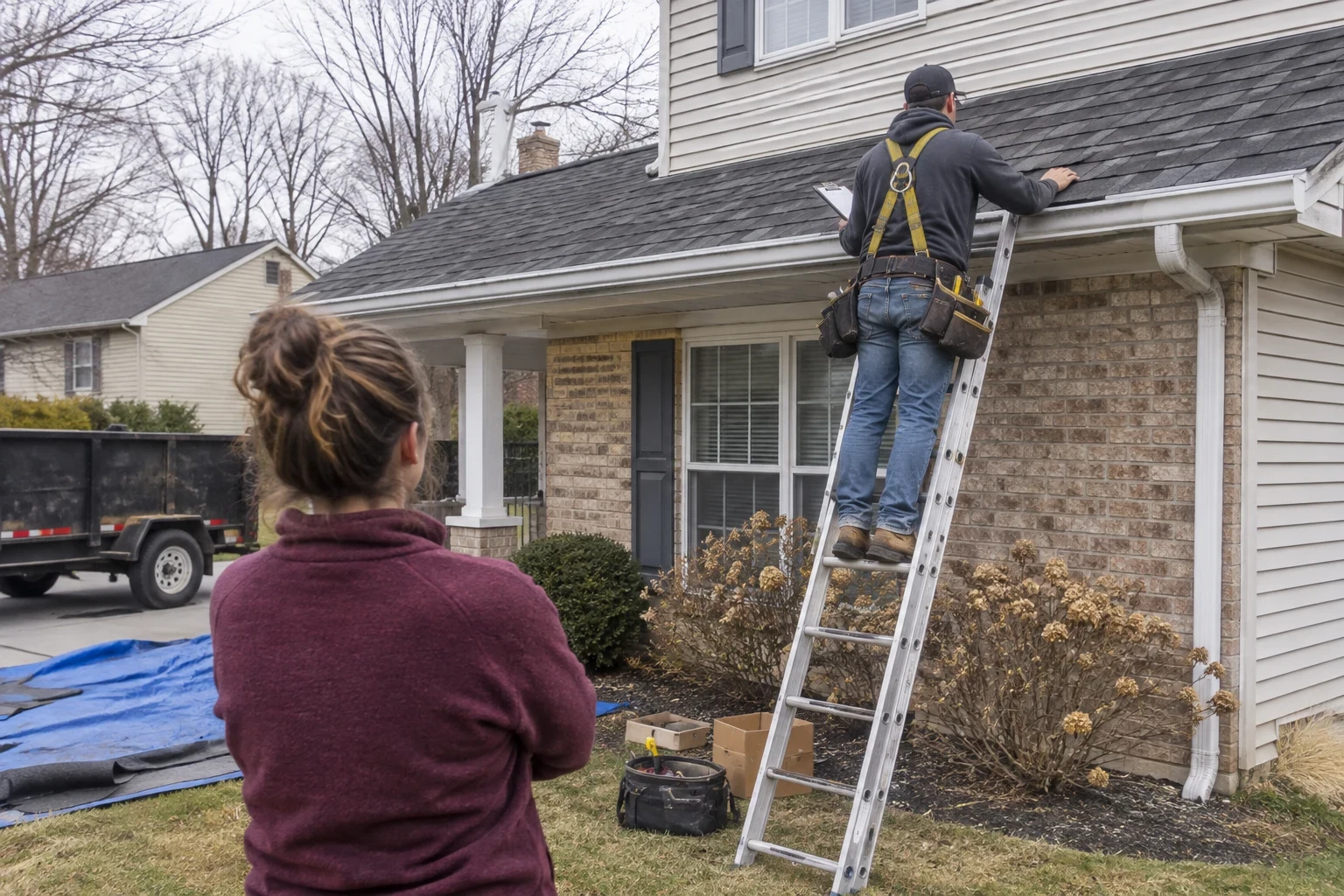
Signs your shingles are near the end
- Grit collecting at the downspouts
- A new roof sheds a few loose granules, and that's expected. When dark grit keeps building up at the downspouts, the shingle's protective coating is going and the asphalt beneath is open to UV.
- Shingles losing their shape
- Corners that peel upward or middles that dip inward point to shingles that have dried and stiffened. Each season they grab more wind and crack with less force.
- Tabs missing after wind
- One or two missing shingles is usually a repair. Several gone across different slopes often means the sealant strips have failed roof-wide.
- Moss on shaded slopes
- Dark streaks are often algae and mostly cosmetic. Moss is different: it holds moisture against the shingle and lifts it, shortening its life.
- Light or stains in the attic
- Look up on a sunny afternoon. Daylight through the boards, damp insulation or water marks on the rafters mean water is already getting past the shingles.
How a shingle project runs
- 1
Free roof inspection
We walk the roof and the attic, take photos and tell you plainly whether repair or replacement makes sense. If your roof has good years left, we say so and help you plan for later.
- 2
Written line-item estimate
Your estimate lists tear-off, underlayment, flashing, ventilation and the shingle line separately, with deck repair priced per sheet. We bring color samples so you can see the finish against your home.
- 3
Permit and scheduling
We pull the permit where your town requires one and choose a dry stretch of weather. Shingles seal best in moderate temperatures, so spring and fall calendars fill first.
- 4
Installation
Crews work one section at a time so no part of the deck is left open overnight. Most roofs are finished within a few days, depending on size and pitch.
- 5
Final walk-through
We check the flashing, vents and ridge line, sweep again for nails, and walk the property with you before we call the job done.
What moves the cost of a new shingle roof
Every shingle price we give starts with a tape measure and a look at the decking, never a guess from the street. The parts of the job are listed separately, so you can see which choices change the total and plan your budget around them.
- Roof area and slope
- A larger roof needs more material and more hours on site, so the total rises with the square footage. Steeper pitches add time too, because the crew sets up footholds and safety lines before work starts and moves more carefully once it does.
- The shingle you pick
- Three-tab is the most basic option, and architectural lines sit a step above it. Designer and impact-rated shingles cost more again, and impact-rated products are worth weighing if hail worries you.
- What's under the current roof
- A roof with two existing layers takes more labor and disposal to strip than a roof with one. Rotted decking can only be counted after the old material comes off, so we quote a per-sheet rate in advance and you know the cost before we find anything.
- Penetrations and ventilation
- Chimneys, skylights, valleys and plumbing vents each need their own flashing. Adding intake or exhaust ventilation adds some material, but it protects the life of the new shingles.
Shingle roofing questions
- How long will an architectural shingle roof last?
- Many last two decades or more when the attic is well vented and the roof sees normal weather. Ventilation, sun exposure and storm history affect lifespan more than the number printed on the package. We'll tell you what we see on your roof during the inspection.
- Is it okay to install new shingles on top of the existing roof?
- Our advice is to strip the old roof first. A second layer hides soft decking, puts more weight on the framing and leaves no clean surface for ice barrier and fresh flashing. Starting from one layer also keeps the next replacement simpler and less costly.
- Should I choose shingles or metal?
- Shingles cost less up front and suit most home styles. Metal costs more but lasts longer and sheds snow quickly. Our Metal Roofing page covers the tradeoffs, and we can price both so you can compare them side by side.
- Will a storm claim pay for new shingles?
- If wind or hail caused the damage, it may be covered. We work with homeowners and insurance companies on storm damage claims, documenting the damage with photos and measurements for your adjuster. The carrier makes the coverage decision, and our Storm Damage Repair page walks through the steps.
- Can I spread the cost over time?
- Yes. We offer financing, which pairs well with planning ahead. You can replace the roof in a calm month instead of waiting for a leak to set the schedule.
- Do I need to be home during installation?
- No. We need access to the driveway and an outdoor outlet, and it helps to move cars and patio furniture away from the house. We'll update you by phone and walk through the finished roof with you.
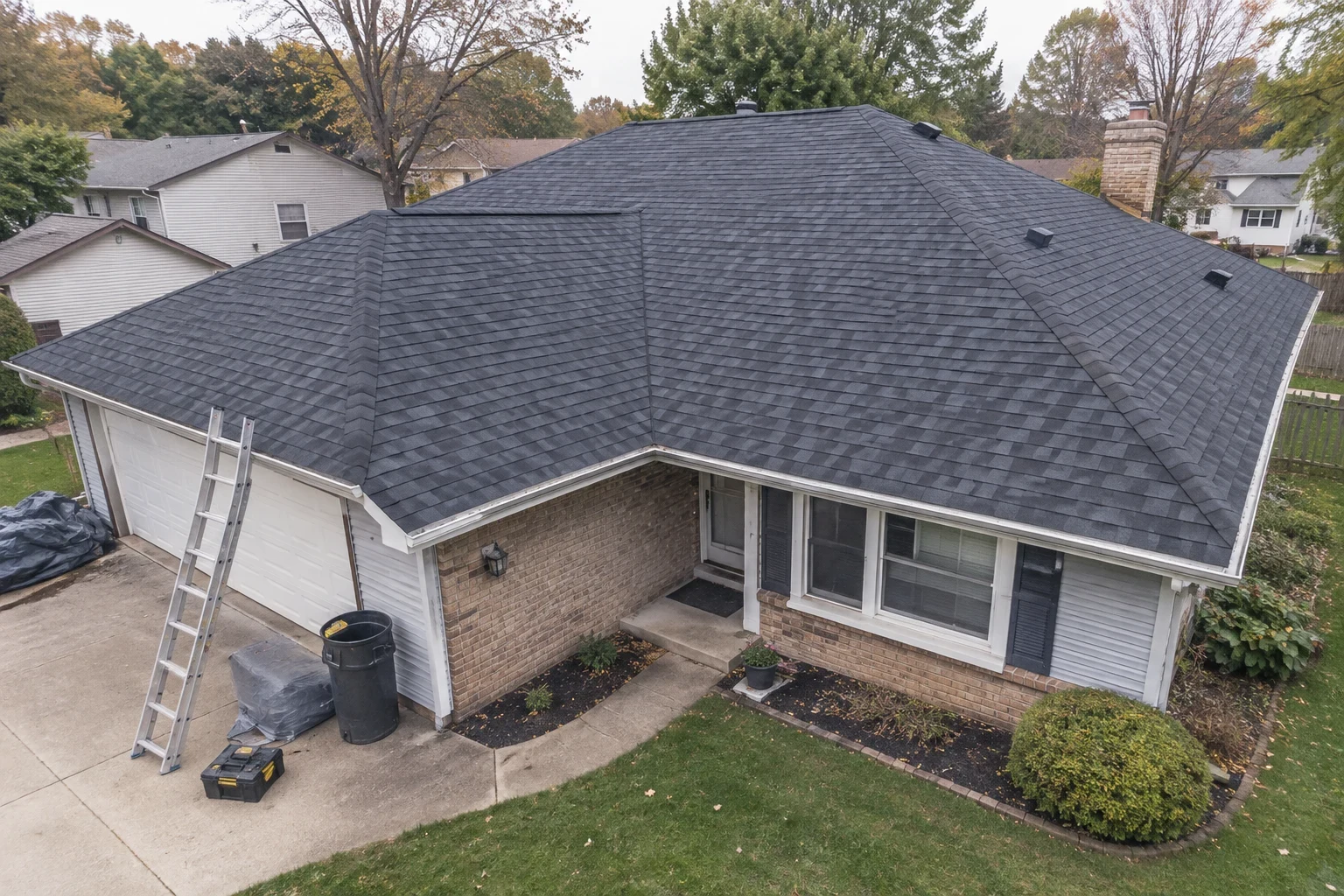
Plan your next roof on your own schedule
A free roof inspection shows how much life your shingles have left and what a replacement would involve. Then you decide when it makes sense.