ServicesTPO Roofing
TPO Roofing in McCordsville
We install TPO membrane on the low-slope parts of your home, including porch roofs, rear additions and flat garage tops, where shingles were never meant to go. We start with a free roof inspection, so you know the condition of the deck and insulation before anything is priced or scheduled.
A membrane built for roofs that barely slope
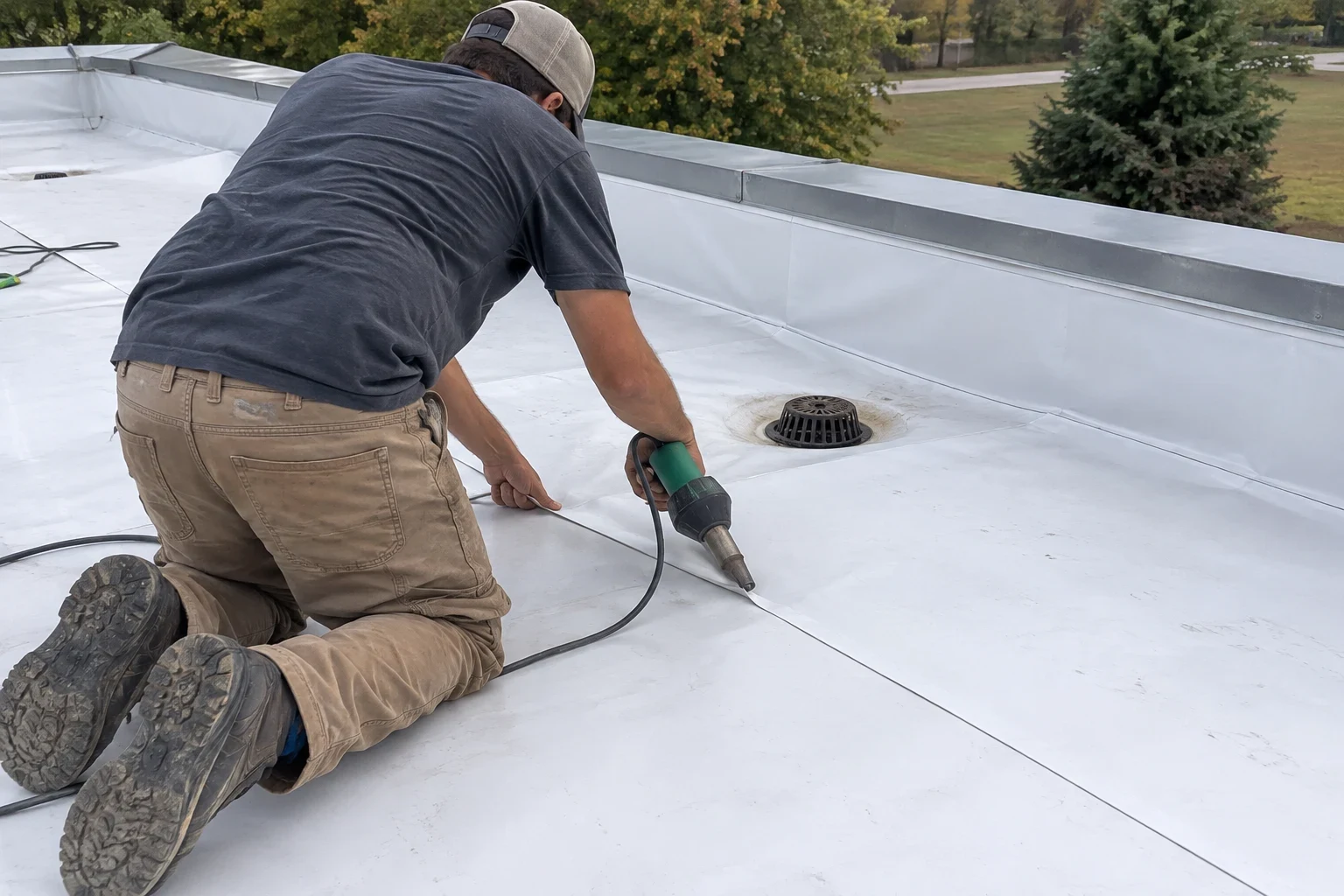
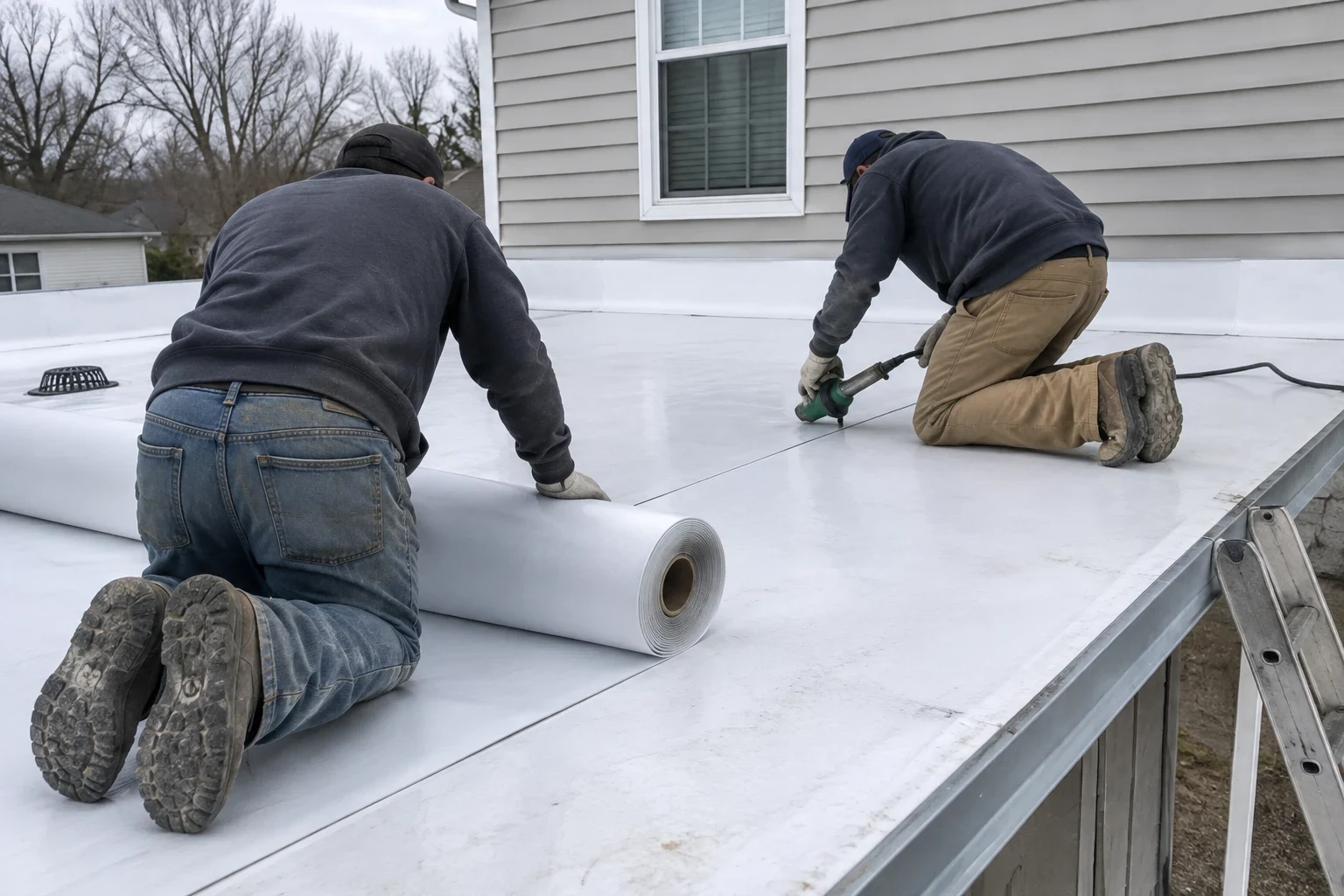
Shingles shed water by gravity and overlap. On a roof with less than about a 3-in-12 pitch, water moves too slowly for that to work, and it backs up under the tabs. TPO is a single-ply sheet of thermoplastic polyolefin that is laid flat and joined with hot air, so the seams fuse into one continuous surface instead of relying on glue or overlap.
Most of the TPO we install on houses covers a section rather than the whole roof: a sunroom, a low porch, a dormer flat or the roof over an attached garage. The white surface reflects summer sun, which keeps those rooms cooler, and the membrane stays flexible through central Indiana freeze-thaw cycles.
Planning ahead matters most on low-slope sections, because a slow leak often runs along the deck for months before a stain shows up inside. Catching a tired roof early lets you budget for a clean replacement instead of paying for soaked insulation and rotten sheathing later.
What a TPO roof from us includes
- Tear-off and deck check
- We remove the old rolled roofing, modified bitumen or failed membrane down to the deck. Every soft or stained board gets photographed and shown to you before it is replaced.
- Insulation and cover board
- Where the roof allows, we add rigid polyiso insulation and a cover board under the membrane. Tapered insulation can also add slope toward the drain edge, which cuts down on standing water.
- Heat-welded seams
- Each seam is welded with a hot-air tool and probed along its full length after it cools. A good weld is stronger than the sheet around it.
- Edges, walls and penetrations
- Where a low roof meets siding or a higher roof, we run the membrane up the wall and finish it with termination bar and counterflashing. Vent pipes and skylight curbs get prefabricated boots or welded flashing rather than a dab of sealant.
- Drainage details
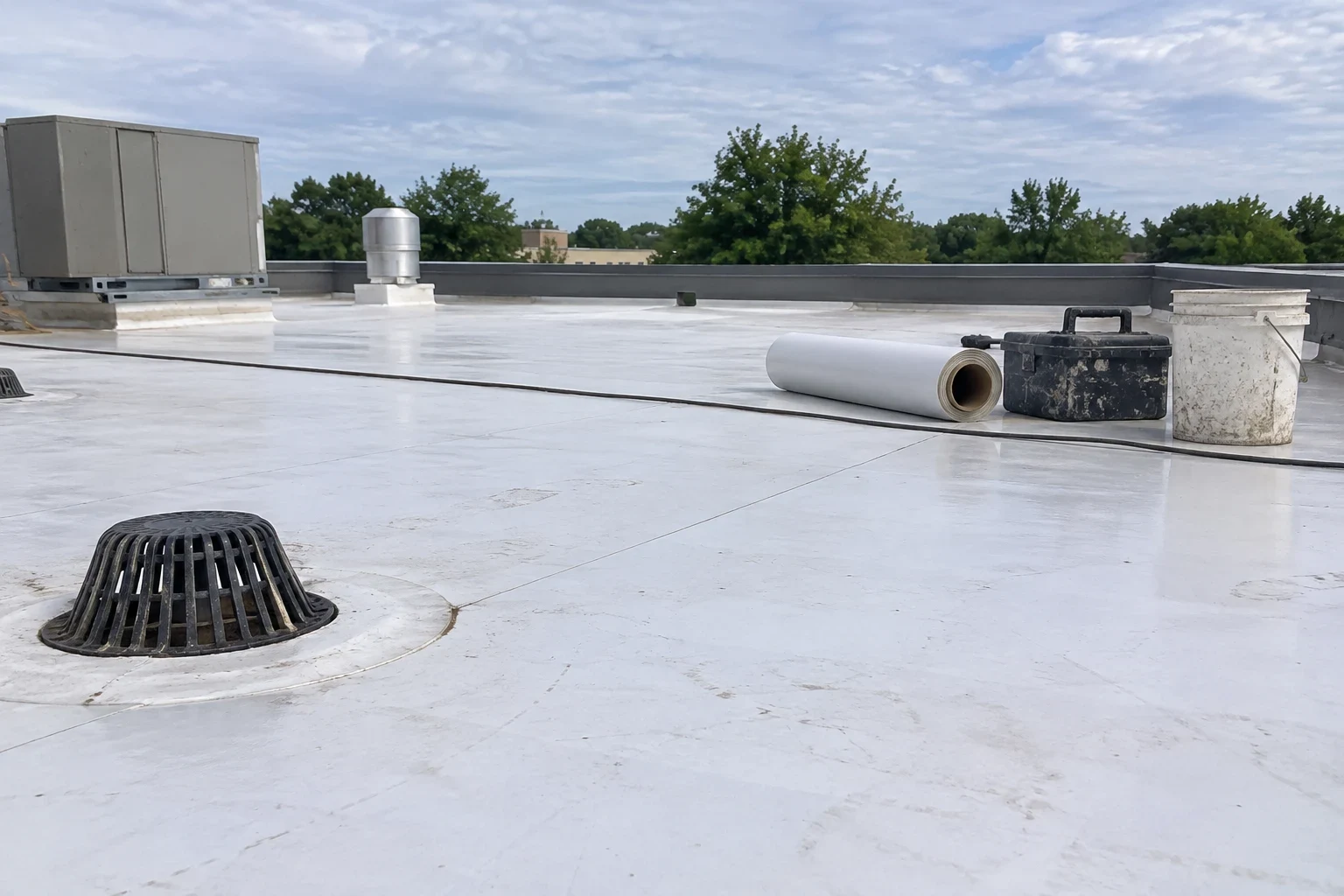
- We set the drip edge and any scupper so water leaves the roof and lands in the gutter. If the gutter itself needs attention, our gutters page covers that work.
- Permit and cleanup
- We pull the permit where your town requires one and clean the yard and driveway with a magnetic sweep for fasteners at the end of each day.
Signs your low-slope roof is due
Water that sits after rain
Puddles still there two days after a storm mean the roof has sagged or the drainage is wrong. Standing water speeds up wear and finds every weak seam.
Blisters, cracks or alligatoring
Older rolled roofing and tar surfaces dry out and split in a grid pattern. Once the surface cracks, water reaches the felt and the deck below it.
Stains on a porch or sunroom ceiling
A brown ring on the ceiling under a flat section usually means the leak started well before it appeared.
Seams lifting at the edges
Peeled corners and loose flashing where the low roof meets a wall are common failure points, especially after winter.
A spongy feel underfoot
If the roof gives when you step on it, the insulation or decking has likely taken on water and should be looked at before the next season.
What moves the price of a TPO roof
The price depends far more on what is under the old roof and how the section ties into the rest of your home than on the membrane itself. We explain each item in the written estimate so you can see where the money goes and decide what to do now and what can wait.
Size and shape
A simple rectangle over a garage goes quickly. A porch with corners, posts and a wall on two sides takes more cutting and flashing.
Deck and insulation condition
Wet insulation and rotted sheathing have to come out. This is the line that grows the longer a leak is left alone.
Membrane thickness and insulation
Thicker membrane and added tapered insulation cost more up front and improve drainage and energy performance.
Wall and roof transitions
Every place the low roof meets siding, a window or a pitched roof needs careful flashing, and that labor adds up.
Access and layers
Tight access, a second-story location or more than one old layer to remove all add time to the job.
How a TPO job runs
- 1
Free roof inspection
We walk the low-slope section, feel for soft decking and check the room underneath for staining. You get photos of what we found, along with a straight answer on whether a fix will hold up or the section has reached the point of replacement.
- 2
Written estimate and timing
We put the scope in writing, line by line, and talk through scheduling so the work fits your budget and the calendar. Financing is available if spreading the cost helps you plan.
- 3
Prep and tear-off
We protect windows, plants and the walls below with tarps, then strip the old roof and repair the deck. Most low-slope sections on a house are dried in the same day.
- 4
Membrane and flashing
Insulation goes down, then the TPO sheet, then the welded seams and wall details. Every seam is probed before the crew packs up.
- 5
Final walk-through
We review the finished roof with you, point out where the water drains and leave the site clean.
TPO roofing questions
Can TPO go on my whole house?
Only if the roof is low-slope. On a typical pitched roof, shingles or metal are the better fit, and our shingle roofing and metal roofing pages cover those. TPO is the right call for the flat and nearly flat parts.
Will a white roof look out of place?
Most low-slope sections on a house are hard to see from the street. TPO also comes in gray and tan if the section is visible from an upper window or the yard.
How does TPO handle snow and ice?
The membrane stays flexible in cold weather, and the welded seams do not open up from freeze-thaw. Good slope toward the edge matters more than anything, which is why we often add tapered insulation.
Do I need to replace it, or can it be repaired?
If the deck is dry and the problem is one seam or a flashing detail, a repair often makes sense, and our roof repair page explains that work. If the insulation is wet across the section, replacement is usually the better use of your money.
Who will be working on my roof?
Our own crew handles it, from tear-off to the final seam check. We are a licensed company, bonded and insured, and we hold an A+ BBB rating. Ask about any of that when you call and we will go over the details.
Plan your low-slope roof before the next leak
We will look at the deck, the seams and the drainage, show you photos and give you an honest repair-or-replace answer. From there you can budget on your own timeline.