ServicesRoof Inspections
Roof Inspections in McCordsville
A free roof inspection gives you a clear picture of your roof today and what it will likely need over the next few years. We walk the roof, photograph what we find and explain it plainly, so you can plan and budget on your own schedule.
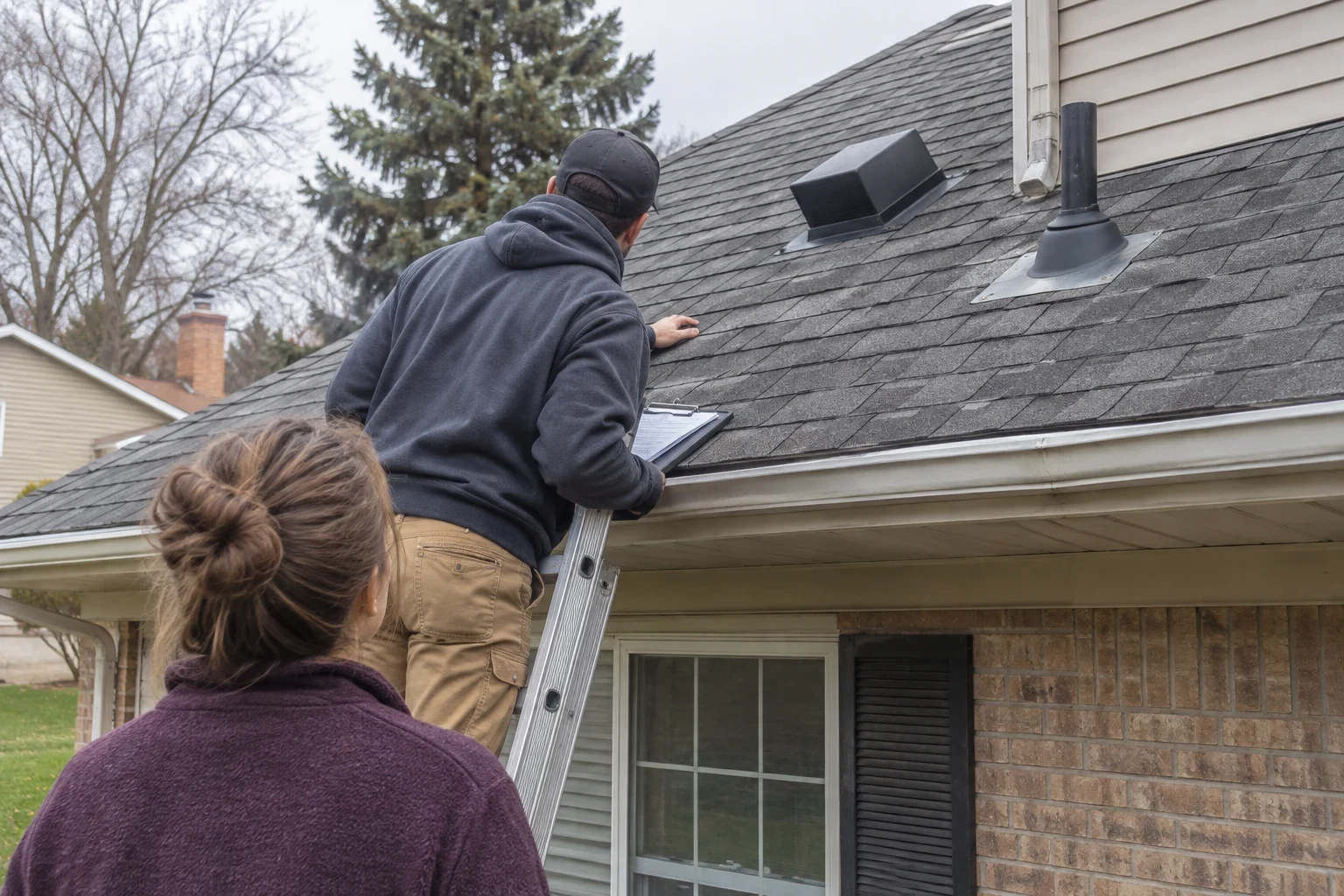
Know where your roof stands before it decides for you
Most roofs give quiet warnings long before they leak. A shingle loses its granules, a seal around a vent pipe dries out, a section of decking starts to soften. Caught early, these are small repairs you can schedule for a dry week. Left alone through a few winters of freeze and thaw, they tend to become ceiling stains and rushed decisions.
Our inspections are built around that difference. We look at the whole system, from the shingles and flashing to the attic and gutters, and then tell you what we would do now, what can wait a season or two, and what to keep an eye on. Some homeowners leave with a short list of repairs. Many leave knowing their roof is in good shape and roughly how many years it has left.
We move carefully on your roof and treat your home with the same care we would want for our own. The inspection costs nothing, and there is no expectation that you hire us afterward.
What we check on every inspection
- Shingle and surface condition
- We look for granule loss, curling, cracking, lifted tabs and hail bruising. On metal or TPO roofs we check fasteners, seams and membrane wear instead.
- Flashing and roof penetrations
- Leaks most often begin where something passes through the roof or meets a wall, such as a chimney, skylight or vent pipe. We examine the metal flashing and the sealant at each of those spots, because sealant tends to give out well before the shingles do.
- Attic, decking and ventilation
- From inside the attic we look for daylight, water stains, damp insulation and soft decking. We also check intake and exhaust vents, because poor airflow shortens shingle life and feeds ice dams in winter.
- Gutters and drainage
- We note sagging runs, loose hangers, clogged downspouts and water pooling near the foundation. Gutter problems often show up as fascia rot before anyone notices them on the roof.
- Photos and a written report
- You get photos of what we found and a plain-language summary that sorts each item by urgency. It is something you can keep, compare against next year, or hand to an adjuster if storm damage turns up.
Signs it is time for an inspection
Your roof is 15 years or older
Many asphalt roofs start showing their age in this window. An inspection tells you whether you have a few good years left or should start setting money aside for roof replacement.
A hail or wind storm passed through
Hail damage is hard to see from the ground and can take months to turn into a leak. Checking soon after a storm also keeps the timeline clean if you decide to file a claim.
Granules in the gutters
Small, sand-like grit collecting in gutters or at the bottom of downspouts means shingles are wearing faster than they should.
Ceiling marks or a stale smell upstairs
Yellowed or tan patches on drywall, or air in the attic that smells damp and close, usually mean water has been finding its way in slowly for some time.
Ice dams last winter
Thick ice along the eaves often signals an attic ventilation or insulation problem. It is worth sorting out in spring or summer, well before the next cold snap.
You are buying or selling
A current inspection takes guesswork out of negotiations and helps both sides understand what the roof will need.
What the inspection costs, and what shapes the work after it
The inspection itself is free. If we find work, the price depends on what is actually there, and we explain every line in writing before anything is scheduled. Spotting a problem early is usually the single biggest way to keep that number down. For larger projects, we offer financing so the work can fit your budget.
How far the damage has gone
Resealing a vent boot is a small job. Replacing rotted decking underneath it is a larger one. This is why timing matters so much.
Roof size, pitch and access
Steeper roofs and multi-level rooflines take more time and safety equipment to work on, which affects labor.
Materials
Repairs are matched to what you already have, whether architectural shingles, standing seam metal or a TPO low-slope section.
Insurance involvement
If storm damage is covered, your out-of-pocket cost may be limited to your deductible. We work with homeowners and insurance companies on storm damage claims, and our storm damage repair page covers that process in more detail.
How an inspection runs
- 1
A short phone call
You tell us the age of the roof, any concerns and a time that suits you. We will ask a few questions so we arrive prepared.
- 2
On the roof
We walk the roof when it is safe to do so, working slowly and stepping carefully to avoid scuffing shingles. On steep or fragile roofs we use the ladder, binoculars and closeup photos instead.
- 3
In the attic
If you are home and comfortable with it, we check the underside of the decking, the insulation and the vents. It usually takes a few minutes and tells us a great deal.
- 4
A walk-through of what we found
We sit down with you, go through the photos and answer questions. Your written summary follows, with repairs ranked by urgency so you can plan them in order.
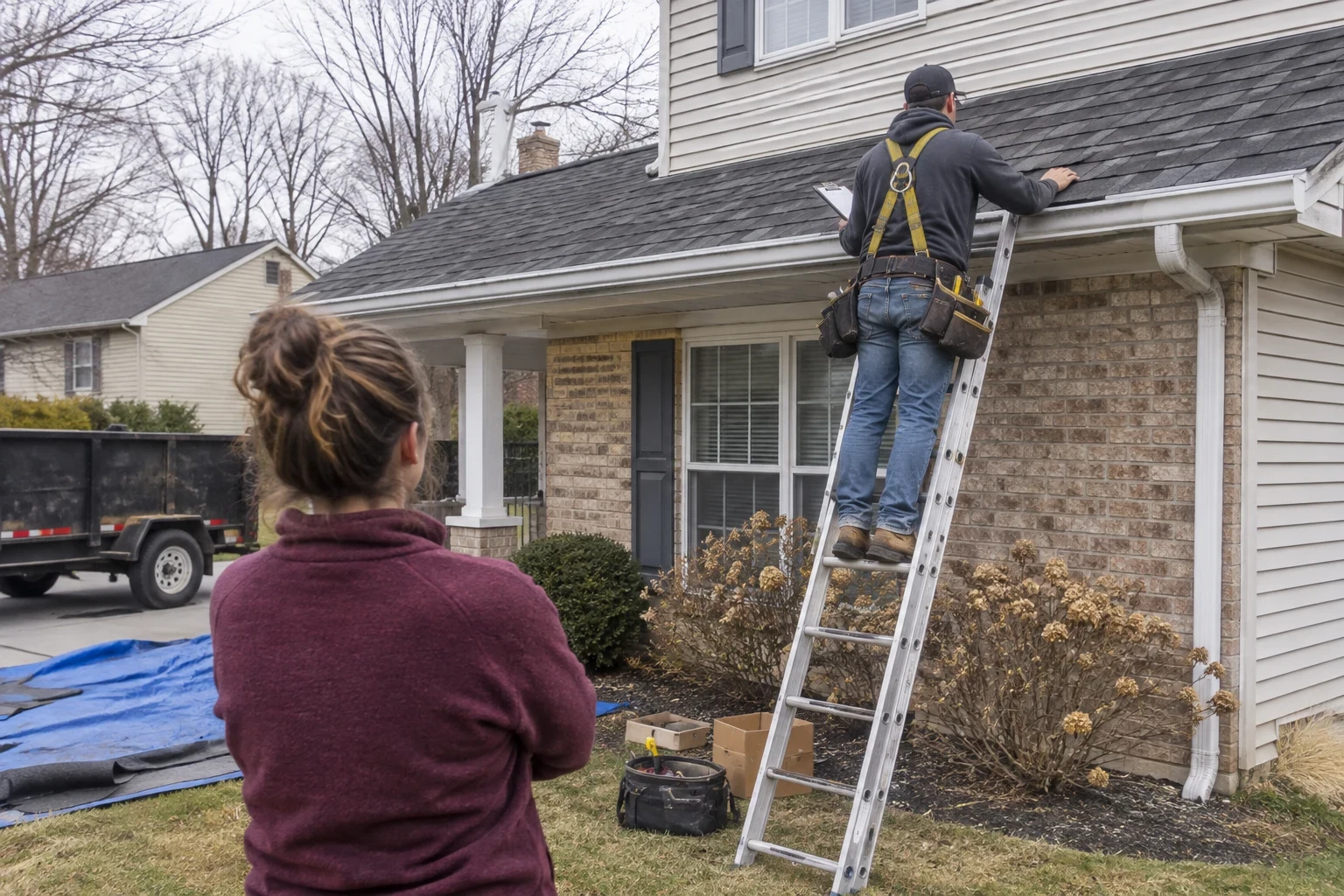
Roof inspection questions
Is the inspection really free, and am I obligated to anything?
Yes, it is free, and no, you are not obligated. You keep the photos and the written summary either way. Many inspections end with us telling the homeowner nothing needs doing yet.
How long does an inspection take?
Most take about an hour, sometimes a little longer for a large or complex roof. Add a few more minutes if we check the attic and walk you through the findings.
Do I need to be home?
It helps, since we can show you photos right there and take a look from the attic side. When your schedule does not allow it, we can still go over the roof from outside and talk the results through with you over the phone afterward.
How often should a roof be inspected?
We suggest a look every 12 to 24 months, and another after any hail or strong wind. Booking in late spring or early fall leaves time to handle repairs before summer heat or the first hard freeze arrives.
Can your report help with a storm claim?
Dated photos and a written description of storm damage are useful when you file. We can explain how a claim usually unfolds and meet with your adjuster on site, though the adjuster makes the coverage decision.
How do I know you are a reputable company?
We are licensed, bonded and insured, and we hold an A+ BBB rating. Beyond that, we are glad to answer any question about how we work before anyone sets foot on your roof.
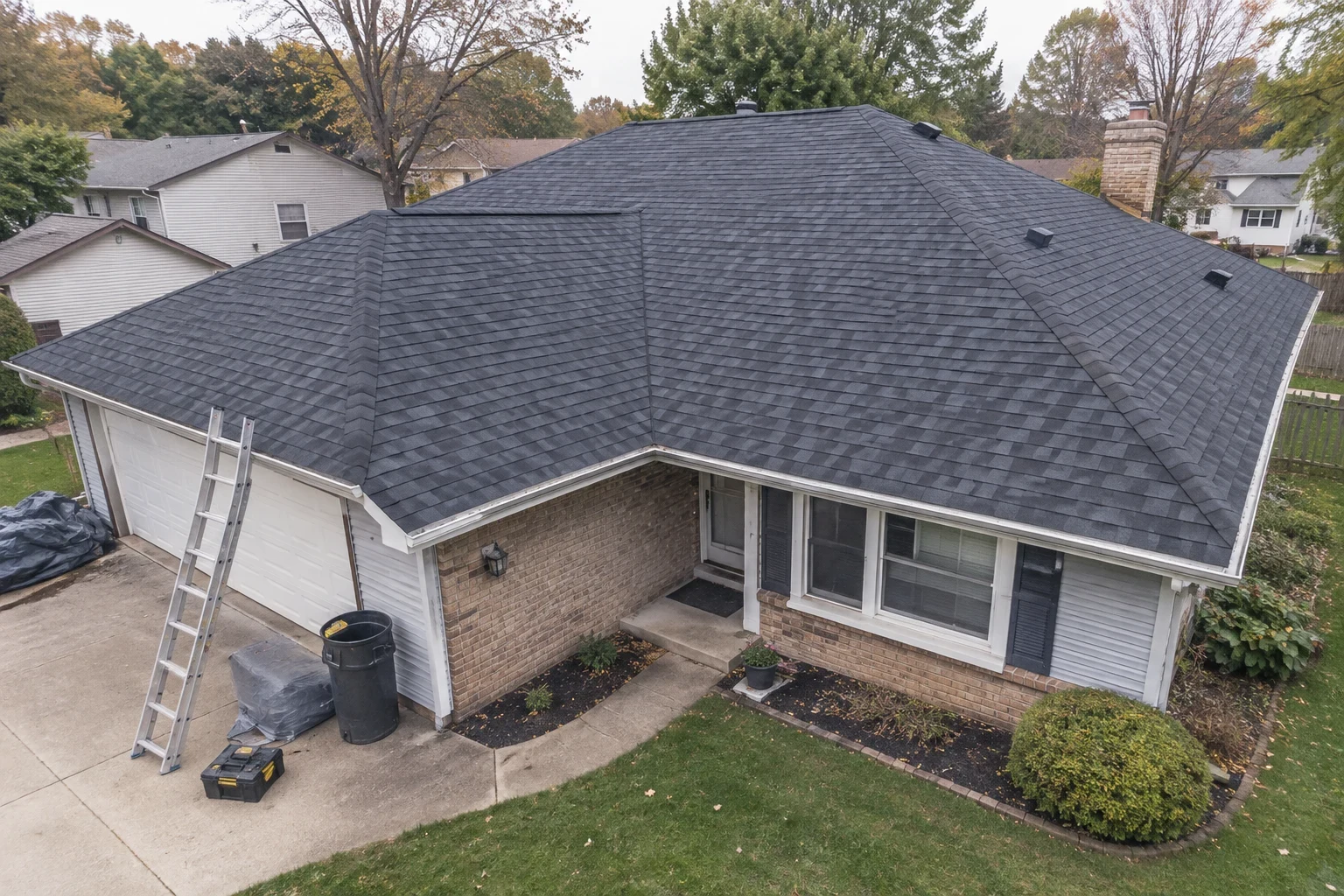
Plan your roof work on your terms
A free inspection now gives you the facts, the photos and a timeline you can budget around. We serve homeowners in McCordsville, Fortville, Fishers and nearby towns.